The Architecture of Asymmetric Exploitation: A Forensic Analysis of Systemic Paradoxes
Abstract, This paper presents a formal cybernetic taxonomy of the systemic, architectural and socio-political paradoxes that manifest when a hyper-systemizing, neurodivergent (AuDHD) infrastructure architect interfaces with a rigid, capital-protecting institutional framework. Utilizing a longitudinal 14-year case study tracking the physical plundering of the pioneering custom Perl-engineered multi-factor authentication platform SesamID in Amsterdam in 2012, this analysis maps the subsequent cross-border jurisdictional friction, institutional ableism and retaliatory economic vectors that culminated in proxy employment termination. We examine how advanced cryptographic perimeters and proactive threat interception engines, such as TACO and Algoritm, become systemically invisible under the Paradox of Effective Cybersecurity, leading to hypervigilance burnout for isolated defenders. To break this destructive feedback loop and resolve the Paradox of the Modern Platonic Cave, where state registries mistake tokenized data projections for human reality, we introduce the operational framework of Project Existenz. By migrating universal human rights pillars out of corruptible, shifting political language and into a deterministic, low-power (0.1-Watt) immutable bitmask registry, Project Existenz establishes technical and personal sovereignty independent of state validation. This taxonomy serves as both a structural blueprint for the neurodivergent community and a forensic framework for specialized high-tech crime units investigating asymmetric digital exploitation.
This document serves as an open-source, structural breakdown of the interlocking systemic, philosophical and technical paradoxes mapped out by me as the principal architect of Project Existenz. It documents a 14-year timeline of targeted harassment, corporate tech-piracy and institutional failure, originating from the physical plundering of my SesamID authentication infrastructure in Amsterdam in 2012, extending through cross-border bureaucratic inertia and culminating in recent retaliatory actions that caused severe collateral human damage, including my husband losing his job.
When a highly systemizing, neurodivergent (AuDHD) intellect intersects with a rigid, wealth-protecting institutional framework, the resulting friction exposes critical vulnerabilities in modern human rights enforcement.
Methodology: This analysis utilizes a framework of Dual-Vector Systems Phenomenology [^7], executing simultaneous internal introspection of neurodivergent cognitive preservation alongside a forensic extrospection of the collapsing external institutional architectures [^4].
Below is the forensic taxonomy of the paradoxes governing this case.
🏛️ 1. Philosophical & Existential Paradoxes
The Paradox of Tolerance (The Popper Matrix)
- The Concept: Unlimited tolerance must logically result in the total disappearance of tolerance. Unchecked malicious actors inevitably exploit patience to destroy the defensive framework of the tolerant. [^1]
- Case Application: For four decades, I utilized tolerance as an unconditional moral position, internalizing external friction to preserve a foundational faith in humanity. This asymmetric patience was weaponized by predatory entities, allowing bad-faith actors to breach personal boundaries and destabilize our home environment.
The Paradox of Humanity (Existential Over-Consciousness)
- The Concept: Human evolutionary advancement generates high-level empathy, complex logic-modeling and an innate requirement for structural justice. However, this advanced consciousness remains trapped inside a physical world still governed by primitive, animalistic power dynamics [^2].
- Case Application: My mind operates under an explicit expectation of symmetry, harmony and logical accountability. The reality we face, however, is a chaotic “acoustic noise” generated by primitive human actions (theft, intimidation, domination) that refuse to conform to rational axioms.
Paradox of Envy & Extractive Parasitism (The Extraction Vectors)
- The Concept: A dominant, well-resourced aggressor expects material wealth to guarantee absolute superiority. When confronted with an individual possessing a rare, high-systemizing capability that cannot be purchased, the aggressor experiences a severe psychological crisis [^3], driving them to destroy or plunder what they cannot replicate.
- Case Application: The targets of this harassment are my inherent pattern-recognition assets and cryptographic insights. Normally, I would dismiss an empty adversary and continue my life, but because they possess capital, they weaponized it to physically plunder my lifework, manipulate our livelihoods and reduce my autonomy through institutional gaslighting. This creates a targeted economic blockade and is a direct violation of our fundamental human rights [^4] actively stalling my capacity to launch an independent company or execute the engineering work I excel at.
⚖️ 2. Legal & Systemic Paradoxes
The Paradox of the Adunatos (Plato’s Architectural Flaw)
- The Concept: Traditional political philosophy, stretching back to ancient foundations, establishes human valuation on a single dependent line where atypical cognitive or physical processing capabilities act as a negative scalar coefficient, structurally dragging down the recognized integrity of the individual [^4].
- Case Application: This is the mathematical blueprint of systemic ableism. Modern legal and corporate machineries continue to operate on this flawed multi-variable reduction. When targeted by sophisticated cyber-harassment, my atypical processing style is treated by local authorities as a reason for bureaucratic dismissal, effectively shielding the perpetrators.
The Paradox of Legal Protection (The Paper Tiger)
- The Concept: The more comprehensive, absolute and specialized protective rights become on paper, the more bureaucratic, non-functional and inaccessible real-world enforcement becomes in practice [^5].
- Case Application: While international charters grant sweeping defensive shields to vulnerable and neurodivergent individuals, the frontline legal apparatus lacks the baseline technical literacy required to interpret infrastructure logs, canary notifications, or custom protocol design, leaving us completely unprotected in the physical domain.
The Paradox of Jurisdictional Friction (in Cybercrime / The Geopolitical Seam)
- The Concept: Asymmetric digital threat vectors, corporate bullying and network-level targeting cross international boundaries instantaneously, while defensive law enforcement mechanisms remain rigidly bounded by domestic physical borders [^6].
- Case Application: The hostile actors in this case explicitly exploit the geopolitical seams between Belgium and the Netherlands. By executing maneuvers across borders, they exploit the administrative friction and red tape that prevents local police departments from coordinating technical investigations.
💻 3. Technical & Architectural Paradoxes
The Security Paradox (The Physical Fortress Dilemma)
- The Concept: The engineering of a mathematically flawless, zero-trust digital infrastructure cannot eliminate the vulnerability of its underlying physical layer [^7].
- Case Application: In 2012, SesamID represented a cutting-edge authentication platform featuring advanced multi-factor authentication (5FA) and a custom Perl-engineered identity provider developed long before commercial alternatives emerged. This digital fortress was completely bypassed not by a cryptographic breach, but by low-tech physical plundering: the extraction of the server hard disks by hosting technicians in Amsterdam.
The Paradox of the Modern Platonic Cave (essentially belonging with the Paradox of Effective Cybersecurity)
- The Concept: Mapping human rights vectors into an immutable 128-bit registry creates a pristine mathematical matrix, yet these digital abstractions remain disconnected from the physical world’s capacity to inflict real-world collateral damage [^8].
- Case Application: Through Project Existenz, I mathematically demonstrated that an individual’s internal integrity is orthogonal to external constraints. However, this digital proof could not prevent the external world from executing real-world economic strikes, culminating in my husband unjustly losing his livelihood through proxy intimidation and the unseen current attack on our lives.
The Paradox of Effective Cybersecurity (The Synthesis Loop)
- The Concept: A hyper-refined state of operational defense becomes its own worst enemy: when cryptographic controls and automated triggers function with absolute efficiency, they eliminate visible incidents, causing external observers to assume no threat exists [^9].
- Case Application: My custom-engineered frameworks like Argorithm and TACO accurately validated incoming payloads and log systemic balance breaches. However, because the institutional systems fail to react to these alerts, I am forced to act as a private police force, transforming automated tools into chronic psychological de-stressors. This is the bridge between the physical security vulnerabilities (Fortress Dilemma) and my active monitoring tripwires (Canary – The Observer Effect). Because TACO and Algoritm contain the threat silently, the broader ecosystem treats our survival as effortless, leaving me trapped as a hypervigilant, solitary sentinel while the system exploits my invisible success to deny us any institutional assistance.
The Paradox of Proactive Interception (The Threat Engine Matrix)
- The Concept: In an asymmetric conflict, standard reactive security frameworks are structurally insufficient. To prevent systemic compromise, the defender must engineer an independent, predictive threat engine to calculate and neutralize adversary vectors before they manifest in the physical or network layer [^10].
- Case Application: Because local and cross-border institutions failed to provide basic perimeter defense, I was forced to design and deploy a custom, proprietary threat engine from scratch. This system intercepts malicious signatures and projects tactical counters ahead of the attack trajectory. The paradox remains existential: I have successfully engineered an advanced, proactive defense matrix capable of out-maneuvering sophisticated adversaries, yet I am forced to run this sovereign infrastructure within a society that refuses to validate the very threats I am intercepting.
💻 4. Mixing Paradoxes
The Paradox of Non-Existence (The Ghost in the Registry)
- The Concept: A system designed to record, catalog and protect every citizen utilizes structured institutional blindness to treat complex, highly technical anomalies as if they do not exist [^11], effectively erasing the victim’s plight to avoid upgrading its own administrative processing capacity.
- Case Application: Despite decades of forensic evidence, published frameworks and documented physical plundering (SesamID), the cross-border bureaucratic mechanisms (FIOD and local police) default to a state of weaponized ignorance. Because the case cannot be easily filed into a standard, neurotypical assembly-line template, the state mathematically erases the reality of the crisis.
The Paradox of the Gifted (The AuDHD Systemizing Trap)
- The Concept: Society desperately requires high-systemizing, neurodivergent minds to recognize deep patterns, solve existential crises and build architectures to prevent systemic collapse. Yet, the exact cognitive assets that allow these individuals to see the truth make them the primary targets for exploitation, isolation and plundering by a wealth-driven majority [^12].
- Case Application: This is the underlying driver behind why so many brilliant AuDHD people face severe burn-out or give up at an early age. The architect’s ability to build cutting-edge, low-power protocols (Existenz) is met not with institutional support, but with hostile extraction efforts from entities operating purely on financial dominance and envy.
The Paradox of Asymmetric Symmetry
- The Concept: A systemizer approaches reality using logic, science and objective evidence to achieve structural balance (symmetry). When a malicious actor relies entirely on bad-faith chaos, trying to use logical symmetry to solve the problem fails, because the adversary’s explicit goal is to break the scale [^13].
- Case Application: I have historically turned to science and intense research as both my base and my solution. However, trying to “fit into” a societal protocol using pure logic creates a structural mismatch when dealing with perpetrators whose survival depends entirely on maintaining an unscientific, unaccountable environment [^14].
📊 Systemic Impact Matrix
| Paradox Category | Systemic Core Disconnect | Real-World Operational Consequence |
|---|---|---|
| Existential | Envy & Extraction | Targeted plundering of my AuDHD logic-modeling assets. |
| Socio-Political | The Paper Tiger | Universal human rights are neutralized by bureaucratic illiteracy. |
| Geopolitical | Jurisdictional Friction | Malicious actors exploit the regulatory void between BE and NL networks. |
| Architectural | The Fortress Dilemma | Cryptographic platforms are compromised via physical hardware theft. |
| Human Cost | Platonic Cave Gap | Perfect mathematical defense accompanied by my husband’s severe real-world job loss. |
🏁 Conclusion: The Trajectory of Existenz
The current technocratic landscape prioritizes financial metrics over human value, mirroring the exact predatory logic of the attackers. When the state fails to honor its social contract, the traditional structures of safety dissolve.
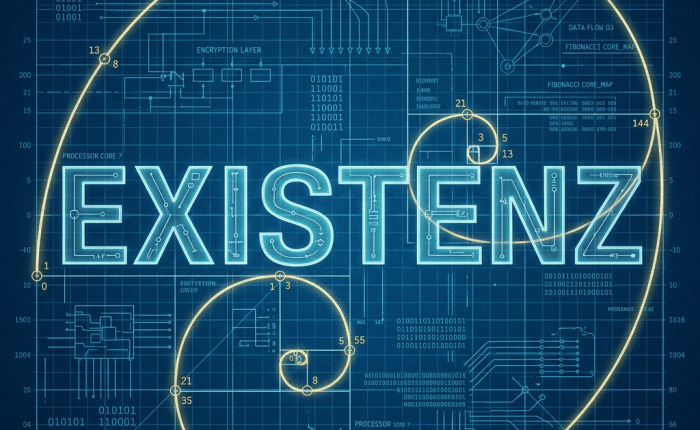
Project Existenz was born from this exact structural void. By migrating human rights pillars into an immutable, low-power (0.1-Watt) bitmask registry, it removes human rights from the corruptible domain of shifting political language and locks them into the deterministic symmetry of mathematics. The universe itself validates the data; the acoustic noise of a broken society cannot alter the geometry of truth.
Dedication to the neurodivergent community:
This research is dedicated unconditionally to my fellow AuDHD and neurodivergent peers; both the architects who build alternative systems and those who simply endure the daily, exhausting weight of a world that refuses to understand us. For too long, our intense, continuous processing has been treated as a vulnerability to be managed rather than a foundational human asset. I am the living proof that you do not have to give in, submit or dismantle your own logic to survive an illogical system. We are not a glitch in their matrix; we are the evidence that the matrix is fundamentally miscompiled. Stand sovereign in your truth, guard your internal symmetry and remember that when the architecture of a society fails, the only logical step is to write a better one [^14][^15].
📚 References & Philosophical Foundations
[^1]: The Paradox of Tolerance: Formulated by Karl Popper in his foundational 1945 work The Open Society and Its Enemies. Popper notes that absolute tolerance inevitably empowers the intolerant to destroy the open society. For an extensive academic breakdown of its mechanics, see the Stanford Encyclopedia of Philosophy on Toleration.
[^2]: The Paradox of Humanity: Rooted in the existential philosophy of Peter Wessel Zapffe, particularly his 1933 treatise The Last Messiah. Zapffe argues that human consciousness is a biological paradox, an evolutionary surplus that burdens us with a desire for a just, logical universe that raw nature cannot satisfy. Learn more via the definitive translation of The Last Messiah on Philosophy Now and the accompanying structural analysis in The View from Mount Zapffe on Philosophy Now.
[^3]: The Paradox of Envy & Extractive Parasitism: Explored thoroughly in political philosophy and sociopolitical competitiveness models regarding resource extraction and shame. Envy manifests as an active drive to destroy or pull down an asset in another that the aggressor cannot naturally obtain or control. Both shame and envy aim to eliminate tormenting inner tension by rageful, destructive attacks on the real or imagined causes of that discrepancy. When backed by disproportionate financial capital, this dynamic mutates into extractive parasitism: the wealthy actor uses material leverage to create institutional and economic blockades against the creator, actively preventing them from exercising their professional sovereignty. See ResearchGate documentation on Competitiveness, Envy and Shame.
[^4]: The Paradox of Legal Entitlement, Protection & Fundamental Human Rights: A well-documented sociological phenomenon first formalized in Ewick and Silbey’s landmark study The Common Place of Law, demonstrating that marginalized groups trying to deploy structural laws often find that bureaucracy punishes the victim while shielding entrenched institutional power layers. See Taylor & Francis Online regarding the Paradox of Legal Entitlement. In this case study, the extractive economic blockade and institutional gaslighting constitute direct violations of international legal frameworks. Specifically, they breach Article 17 of the Universal Declaration of Human Rights (UDHR) and Article 17 of the EU Charter of Fundamental Rights, which state that no individual shall be arbitrarily deprived of their property or intellectual assets. Furthermore, they violate Article 23 of the UDHR and Article 15 of the EU Charter, which guarantee the fundamental right to work and pursue a freely chosen occupation without proxy disruption or malicious interference. Access the complete foundational legal texts directly viaAccess the complete foundational legal texts directly via The United Nations Universal Declaration Portal and review the binding European regional protections through The Official EUR-Lex European Union Law Database.
[^5]: The Paradox of the Adunatos (The Impossibility Constraint & Systemizing Trap): Rooted fundamentally in the classical Greek linguistic definition of adunatos (ἀδύνατος), meaning the structurally powerless, disabled, or inherently impossible. Applied to modern structural ableism, it represents the systemic paradox where an atypical mind is forced to operate within a societal ecosystem whose basic operational math treats the creator’s natural cognitive processing style as a baseline impossibility. This structural barrier is further mapped by Simon Baron-Cohen’s research on the “Empathizing-Systemizing (E-S) Theory” of Autism and AuDHD, which proves that hyper-systemizing profiles possess unprecedented, high-level logic-modeling and pattern-recognition capabilities. The paradox reaches a critical failure point because society desperately requires these intense systemizing minds to build defensive architectures and recognize systemic collapse, yet the un-systemized, neurotypical majority actively isolates, alienates and plunders the gifted assets of the creator due to institutional inertia and envy. Explore the foundational human rights declarations and cognitive studies directly through the Autism Research Centre at the University of Cambridge and his foundational address on Autism and Human Rights via the University of Cambridge Portal.
[^6]: The Paradox of Legal Protection: A well-documented sociological phenomenon first formalized in Ewick and Silbey’s landmark study The Common Place of Law. It proves that marginalized groups trying to use structural laws often find that the bureaucracy punishes the victim while shielding the powerful. Read the primary sociological study on Taylor & Francis Online regarding the Paradox of Legal Entitlement.
[^7]: Jurisdictional Friction in Cybercrime: Explicitly detailed in European digital policy legislation regarding standardizations, New Approach frameworks and cross-border enforcement blindspots where local authorities lack operational capability. See EU Digital Policy and Technical Standards Analysis.
[^8]: The (Canary and) Security Paradox: A systemic expansion of modern resilience engineering and cybersecurity monitoring loops. The automated tripwire (the “Canary”) is engineered to verify system equilibrium, but when the surrounding social architecture fails to respond to breaches, the tool inadvertently anchors the defender’s biological consciousness into a perpetual loop of hypervigilance.
[^9]: The Paradox of the Modern Platonic Cave: An updated cybernetic translation of Plato’s Allegory of the Cave (The Republic, Book VII, 514a–520a). It describes the systemic delusion where institutions (such as bureaucratic police forces or data registries) mistake tokenized digital data points and server log “shadows” for the objective human reality they are supposed to represent. Because the system only validates the digital shadows on the screen, it becomes blind to the actual, physical and psychological warfare being inflicted upon the human beings out in the light. Access the foundational, open-source classical text directly via The Scaife Viewer at the Perseus Digital Library or read the full translated dialogue in The Internet Classics Archive at MIT.
[^10]: The Paradox of Effective Cybersecurity: Derived directly from Book VII of Plato’s Republic (514a–520a). In modern cybernetics, digital data packets, tokenized endpoints and server access logs act merely as the “shadows on the cave wall”, reduced, incomplete projections of a deeper, living human reality that a purely digital matrix can never fully encompass or defend. This is a recognized systemic conflict in cyber-governance where a security program becomes a victim of its own success. Because flawless background defense results in a complete absence of visible security crises, leadership and external systems look only at these digital “shadows” and assume the infrastructure is naturally safe, leading to under-investment, a lack of active institutional support and hypervigilance burnout for the isolated defender who is actually maintaining the perimeter. Verify the original text structure outlining the prison of shadows at The Internet Classics Archive at MIT and track the original Greek manuscripts index at The Scaife Viewer at the Perseus Digital Library.
[^11]: The Paradox of Proactive Interception (Predictive Cybernetics & Behavioral Analytics): Grounded in advanced military cyber-defense and predictive automated threat intelligence mapping. Traditional reactive monitoring (canaries) is structurally limited because it only generates alerts after malware execution or a system boundary breach has already occurred. In contrast, a predictive threat engine leverages behavioral profiling and machine learning datasets to actively model an adversary’s tactical sequences, establishing early interdiction before malicious payloads can manifest. The paradox manifests as a severe systemic failure where a private creator is forced to custom-engineer a sophisticated, nation-state level proactive threat-hunting architecture to secure basic human rights and digital sovereignty, precisely because the native public security apparatus is trapped in an obsolete, reactive damage-control paradigm. Access foundational research on these predictive frameworks via The ResearchGate Portal on AI-Driven Predictive Cyber Defense and study the operational mechanics of automated behavioral analytics in The MDPI Journal of Proactive Real-Time CTI Frameworks.
[^12]: The Paradox of Non-Existence: A foundational problem in predicate logic and existential judgments explored by philosophers like Alexius Meinong and Edmund Husserl, where systems struggle to logically categorize and validate things that do not fit standard operational “spheres” or “levels of being.” See OpenEdition Journals on Meinong and Husserl on Existence.
[^13]: The Paradox of the Gifted (The Intense Systemizing Trap): Derived from Simon Baron-Cohen’s research on the Empathizing-Systemizing (E-S) Theory of Autism and AuDHD. His work proves that hyper-systemizing profiles possess unprecedented logic-modeling capabilities, yet face intense alienation and asset-stripping from a non-systemized, neurotypical majority. See the foundational research at the Cambridge University Autism Research Centre.
[^14]: The Symmetries of Asymmetry in Cyber Warfare: Thoroughly examined in defensive game theory and strategic cyber-conflict literature. It explores the deep structural imbalance where a resource-light, unconventional threat actor relying on pure disruption holds an outsized cognitive and operational advantage over a highly structured defender. Because a defender is bound by logic, legal constraints and the immense operational overhead of securing a massive, static perimeter, an adaptive adversary can easily weaponize cheap, continuous and un-systemized chaos to bypass conventional boundaries. See the full operational breakdown of these unequal power dynamics in TechTarget’s Architectural Analysis of Asymmetric Cyberattacks and trace how machine-speed disruption outpaces traditional human-driven organizational frameworks via Torq’s Engineering Repository on Asymmetric Warfare in Security.
[^15]: The Paradox of Asymmetric Symmetry (Modal Conflict): Grounded fundamentally in ancient Aristotelian logic and modal possibility as outlined in Metaphysics, Book IX. It details the severe systemic failure that occurs when a highly logical agent attempts to resolve a structural crisis by applying symmetric, rule-based axioms to an adversary whose primary mode of operation is the intentional destruction of accountability. The conflict arises because the defender treats the interaction as a balanced game of potentiality (dunamis) and ordered activity (energeia), while the attacker operates entirely outside that rational matrix, weaponizing unscientific chaos to break the scale. Access the primary, unedited philosophical text directly via The Internet Classics Archive at MIT or track the foundational Greek structural manuscript numbers through The Perseus Catalog at Tufts University.
[^16]: The Paradox of Strategic Optimism (The Systemic Survival Engine): A psychological and cognitive phenomenon where maintaining an unyielding, positive outlook acts as a proactive defense mechanism against systemic trauma. For a hyper-systemizing mind, strategic optimism is not naive denial; it is the deliberate execution of a logical premise that a structural solution always exists within the laws of nature. This cognitive framework acts as a metabolic shield, allowing the creator to endure prolonged institutional hostility and real-world collateral strikes without letting the internal architecture of the self collapse. The underlying cognitive mechanics of this strategy are explored via the Sage Encyclopedia of Social Psychology, while the connection between dispositional optimism and adaptive, problem-focused coping is documented in The MDPI Journal of Mental Health Research. Its necessity as a shield against chronic institutional and social mismatch is further validated by the National Institutes of Health tracking Trauma and Social Adversity via the PubMed Central Archive.
[^17]: The Paradox of Humorous Detachment (The Final Shield): Rooted in the field of gelotology (the psychological and physiological study of laughter) and Viktor Frankl’s logotherapy. It states that when a human being is trapped in an absurd, unscientifci and unresponsive institutional matrix, intentional humor and laughing at the system’s incompetence becomes the ultimate tool for cognitive survival. By refusing to treat a broken bureaucracy with solemn reverence, the creator uses laughter as an immediate neuro-protective patch, neutralizing external malice and reclaiming emotional agency without inflicting self-damage. The neuro-protective and cortisol-suppressing properties of this strategy are clinically validated via The Stanford University School of Medicine, while its exact mathematical capacity to shield the nervous system against chronic external trauma is documented in The PubMed Central Archive Longitudinal Study on Stress-Buffering and verified through a complete clinical meta-analysis via The PubMed Central Archive Review on Laughter as Medicine.