The Master Key: Why Music Reaches Me When a Hug Cannot

The Master Key: Why Music Reaches Me When a Hug Cannot

Writer’s note: After a long, unexpected break from blogging, I am stepping back into this space. Thank you to those who are here to listen, connect, and explore the deep complexities of the autistic mind with me.

So, Do you know what frisson is?

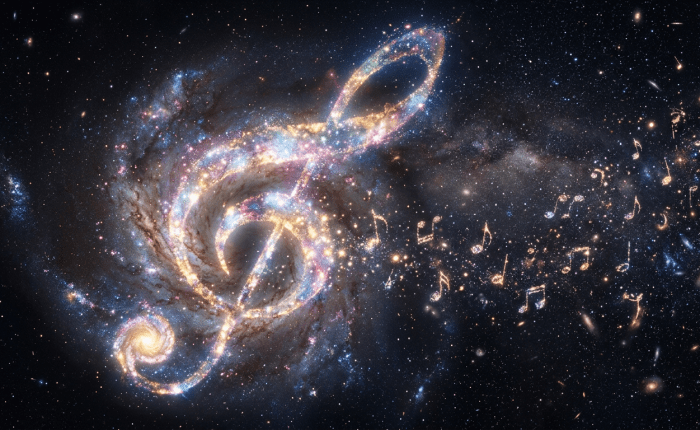
I didn’t know until I was searching for an explanation of an emotion I call “deeply crying inside.” This feeling always gets triggered when I listen to the violin and contrabass. I get the exact same reaction when listening to a live choir, to the extent that I could literally cry.

This profound connection to sound was probably one of the reasons why I was a DJ for over a decade; I realized this emotional energy was transferable to a crowd. Maybe I even need to start doing that again, while I still have the full use of my ears…

High-functioning autism often causes an intense emotional and physical reaction to music known as frisson. This is characterized by hyper-connectivity between the auditory and emotional processing centers in the brain. Stringed instruments like the contrabass and violin mimic human vocal emotional frequencies, triggering this deep reaction and leading to profound emotional releases. It is most often triggered by strings and choral music. Specific musical elements, such as the human vocal range (150–4,000 Hz), tense appoggiaturas (notes that create temporary musical tension), and resonant low frequencies, trigger these profound responses. Tracks like Max Richter’s “On the Nature of Daylight” and Hans Zimmer’s “Time” utilize these exact techniques to create intense, “bittersweet” experiences.


So, is it crying of happiness or because it just sounds sad?

It can actually be both at the same time, or something even deeper.
This feeling often blurs the lines between joy and sorrow. Here is why the brain processes it this way:

1. High Aesthetic Appreciation [1, 2, 3]

* It is often “crying of happiness” from pure beauty.
* Psychologists call this a “kama muta” experience.
* It means being deeply moved by a connection.
* The brain experiences a profound awe of the sound.
* This intense awe overflows into physical tears.

2. The Comfort of Sad Music [4, 5, 6, 7, 8]

* The music may sound objectively sad or melancholic.
* Sad music triggers the release of prolactin.
* Prolactin is a hormone that consoles and calms.
* It mimics the feeling of being wrapped in a hug.
* It creates a safe space to feel deep emotions.

3. Emotional Complexity

* Autistic individuals often experience emotions with immense intensity.
* It’s feeling “bittersweetness” in its purest form.
* It is a mix of grief, beauty, nostalgia, and wonder.
* My DJ background trained my brain to catch these nuances.

Here is a short, punchy section formatted perfectly for your blog. You can copy and paste this right before your final paragraph or add it as a new numbered section.


How the AuDHD Mind Amplifies Frisson

Having a combined blueprint of both Autism and ADHD (AuDHD) creates a perfect storm for experiencing music with this level of physical and emotional intensity. It works through three distinct mechanisms in the brain:

  • The Dopamine Reward Spike: ADHD minds constantly seek dopamine. Powerful musical transitions, like a sudden shift from a low contrabass to a soaring violin, trigger a massive, rapid release of dopamine in the brain’s reward centers, heightening the physical “chills.”

  • Hyper-Focused Auditory Processing: The autistic brain processes sensory data with incredible depth and detail. When listening to a complex arrangement like a symphony, your brain hyper-focuses on the individual layers, frequencies, and vocal nuances that neurotypical ears often filter out.

  • The Emotional Accelerator: While autism provides the deep, direct wiring between sound and emotion, ADHD acts as an emotional accelerator. It makes the transition from hearing a note to physically feeling it happen almost instantly, turning a psychological appreciation of beauty into an immediate physical release of tears.

Merely a track of a gaming score has triggered this response yet again, and that’s how I ended up writing about this on my blog after so many years of silence. I am quite literally feeling the collective human experience through sound. Maybe music has always been my better way to communicate with the world?

Hopefully you enjoy this music as I have enjoyed it myself: https://www.youtube.com/watch?v=J6FTmuf-6mY

This YouTube video is the stunning A Plague Tale Requiem: Symphony concert. It features breathtaking, melancholic performances by world-class cellist Eric-Maria Couturier and the two-time Grammy Award-winning Estonian Philharmonic Chamber Choir, conducting the brilliant compositions of Olivier Derivière. This specific piece is a masterclass in triggering frisson through deep strings and haunting choral arrangements.

[1] [https://www.psychologytoday.com](https://www.psychologytoday.com/us/blog/the-doctor-is-out-and-about/202602/do-happy-tears-exist)

[2] [https://www.thetimes.com](https://www.thetimes.com/life-style/health-fitness/article/science-happy-tears-boost-wellbeing-5b6p0qm5x)

[3] [https://www.theaustralian.com.au](https://www.theaustralian.com.au/health/wellbeing/how-our-happy-tears-help-us-pay-it-forward/news-story/efc22822604cb4b174f26b740cd2e0d1)

[4] [https://pmc.ncbi.nlm.nih.gov](https://pmc.ncbi.nlm.nih.gov/articles/PMC4513245/)

[5] [https://www.reddit.com](https://www.reddit.com/r/musictheory/comments/dzc47t/why_does_music_that_is_melancholy_and_depressing/)

[6] [https://journals.sagepub.com](https://journals.sagepub.com/doi/10.1177/2059204320977384)

[7] [https://pmc.ncbi.nlm.nih.gov](https://pmc.ncbi.nlm.nih.gov/articles/PMC4203803/)

[8] [https://www.bbc.co.uk](https://www.bbc.co.uk/learningenglish/features/6-minute-english/ep-191107)

Autism Spectrum Disorder – factsheet

Autism Spectrum Disorder – factsheet

This is information on a great illustration (see below) which I found at Google images about autism. It has all key-points, while making aware that autism is: (1) not a disease but a disorder, (2) having many types and (3) the umbrella in DSM-5.

A few facts..

1 in 77 children age 3-17 are diagnosed with autism each year, boys are 4 x more likely than girl to have autism. There is a 10 to 17% growth annually in the USA. Autism is the fastest-growing development disorder. Continue reading “Autism Spectrum Disorder – factsheet”

How are you? Those dreadful words!

How are you? Those dreadful words!

It happens almost every time, when meeting someone I know and getting that first word which is Hi and I already know what the next question is going to be. It are those hidden rules of communication and social engagement, which are totally not hidden at all, but yet, not entirely understood. Because, depending on my answer to that question the rest of the conversation will either drastically change or it will just finish with a smile and a goodbye.. Continue reading “How are you? Those dreadful words!”

How do I grasp time?

How do I grasp time?

There’s always a great pun with me and idioms about time. A lot of people say that time flies, every second counts, time is money and other taglines. That’s all too great, if I had any concept of time! Especially when someone says to me “wait a minute”, I get that smile on my face and instantly think: “how long do you want that minute to be?”… Continue reading “How do I grasp time?”

Coping with (insane) stress levels

Coping with (insane) stress levels

The mind is a strange but beautiful organ, which can do great things. Mine works great and different, with a high IQ when there is no stress at all. But as soon as that demon called stress comes knocking on my door, the house starts to shake on it’s grounds.

If there is one thing which I cannot state enough about this demon, is that stress is disastrous for autism combined with ADHD. When stress gets added to the mix, it has direct effect upon my processing power, sensitivity and thinking processes. My efficiency drops by large amounts the higher the stress becomes, rendering me sometimes not possible to function good in society. Continue reading “Coping with (insane) stress levels”

Brain Deceives (Brein Bedriegt) – Book

Brain Deceives (Brein Bedriegt) – Book

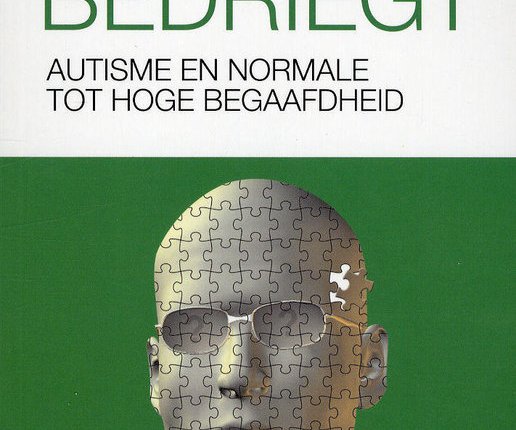
This book explains a lot in detail what is going on in the mind of an autistic person. It is in many aspects so near to my experiences in life, that it became sort-of a guide or a bible, how I work inside my brain. I got to give credit to my psychiatrist for giving me the title to this great book called “Brein Bedriegt” by Peter Vermeulen.

You will be able to read a few rough translations straight from the book, that especially apply to me, but most likely also to a lot more autistic people, besides me. I have left many citations as whole, to be able to get the full context. This does not mean all the details in that citation will all apply upon me or any other person with autism. There are so many variants of autism and comorbidities, giving different results and behaviors.

If you are having autism or you are connected with it, this book is totally worth reading. It is for as far as I know only available in Dutch, so I have taken the liberty to translate the most important quotes, which I find most applicable towards me.. Continue reading “Brain Deceives (Brein Bedriegt) – Book”